
Simplification
This reduction of options doesn't always mean a reduction of uses or features. It could mean the combining of functions or the reduction of steps to perform a function.
However, there is also reduction examples such as...
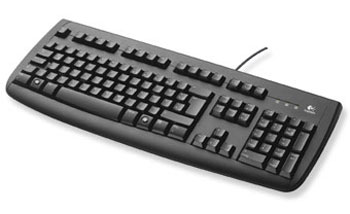
www.scan.co.uk
Logitech Deluxe 250 Wired Keyboard
Being reduced to this...

www.scan.co.uk
Wolf King DK-2388U, Warrior Black Circular Gaming Keyboard
Above we see a reduction of features of a regular qwerty keyboard, to make an entirely new interface that is simpler to use for a specific task. In this case it is PC Gaming. PC gamers don't very often need every key on a full keyboard, and so developers produced an interface that is ONLY suited to gaming (or any "avatar" control), and that only provides the essential keys needed.
Modularisation
The modularisation of an interface happens when there are many features available and options within the interface need to be broken up into groups or objects.

Image of the above qwerty keyboard edited to show modularisation.
A well implemented example is used in most regular qwerty keyboards. As highlighted in the picture above, the different groups of keyboard keys are grouped according to their collective function (typing keys, navigation keys, number pad, etc.). This is a simple example, but one that could improve a new user's understanding of they keyboard quicker than if it was not implemented. It should also be noted there is further modularisation within some groups, such as the top function keys, where rather than having all 12 grouped together, they are divided into groups of four.
Modularisation and simplification will continue to be implemented, but it is up to the interface designer when and where to implement them, as not every interface requires action.

No comments:
Post a Comment