Tuesday, 9 December 2008

LANT Distribution

LANT will not have any physical presence, and so would never be found in shops on CDs, etc. This will make distribution of LANT harder at the start, however it should be noted that LANT remains open-source and free, so the only drawbacks to it having a slow start would be profit-related, but rather not getting the feedback on the program's early stages, and the skinning/plugin community not expanding much.

However, because LANT is free, there will be more users interested in just trying it, and LANT is non invasive, meant to aid the user, and so they will likely keep it installed on their system.

Because of the nature of LAN Parties and how so many files are shared, LANT is likely to be shared or recommended at any party by someone who has encountered it. Therefore, the small-scale LAN Parties are seeming to be the starting ground for LANT.

After LANT has achieved some presence and made a name for itself, there is likeley to be a substantial online community of designers and developers for it, who will keep LANT continuously developing in between LANT's official releases or updates. Once LANT has been perfected enough, organisers of the larger LAN events would feel comfortable enough to integrate it into their scheme.

Eventually LANT's online presense will dominate what initially set out to be a local program, a single-user piece of software, and the small online presense would have heavily multiplied by the integration into big events where thousands of users could potentially hear about LANT. LANT would have enough of a developer community at this stage to keep it going for a long time, with plugins that could make LANT have extra modes/desktops, docks and other ways of interacting, and more. It is even possible the source code for LANT could be used to make other programs not focused at LAN Party goers, but instead, for example, at businesses or schools.

However, that is only a possible future that would happen from LANT's scalability and open-source architecture. But to start with, LANT would have a small online presense in the form of just one small distribution website, where users would be able to upload their skins/plugins and discuss LANT's initial development on the forums.

The initial website is designed to look like:


The layout and content is inspired by current software distribution/information websites such as:

Teamspeak....


... and Ventrilo


These websites offer summaries of their very successful products and easy access to help, social, and download sections, and so are an excellent source to use in the context of LANT. However, LANT doesn't have as much information to display at the start and so wouldn't have to be made to the scale these examples are.

LANT Style and Genre

LANT is open-source, so to allow developers to use the LANT style in their applications or development of LANT, a style guide would be a useful resource for them...


On inspection of this style the theme is certainly a very minimalistic colour palette with only 5 colours being used most of the time, of which the majority are different shades of grey. This style of colours on a white background is very similar to popular websites Wikipedia and Apple, where the major 'blocks' or backgrounds follow an almost grey-scale theme like LANT...


The logos on these web pages are also similar in that they are all grey, with even less colour on display then the LANT logo.

It would be highly beneficial to LANT to see if its target audience would appreciate the functions on offer and how they are displayed, and from the "LANners" that I have talked to, they are all very interested in the functions. They also mentioned how the accessibility and 'standards' conveyed across LANT made it easy to use and very easy to learn.

Here is a "persona" of the type of user that would use LANT...

Name: Colin
Occupation: Student
Gamertag: Uberman
Computer: Custom built Windows XP machine
Uses Computer For: Coursework, Internet Browsing, Instant Messaging, Gaming, LAN Partying
Would Use LANT Regularly For: Keeping Gaming and work separate by dedicating LAN Mode to Gaming
Would Use LANT At A LAN Party For: Logging stats to an Intranet and try and beat last year's

LANT Skinning Example

To effectively show how the 'Skinning' or 'Themeing' function of LANT works, I will continue to use the fictional LAN Party "Big LAN 2008" as the theme. This is beneficial because it shows how LAN event organisers can create their own skins and make them available on their Intranet for LANT users to apply, this is very much an electronic metaphor of going to a festival or gig and buying the official T-shirt or apparel.

Here is a mockup of how the computer would look when a theme is applied to one of the modes ("LAN Mode")...


In this screenshot, as stated above, the user has changed the theme on "LAN Mode" to the 'official' theme of "Big LAN 2008", and so is shown exactly how it is in that mode on the Option Screen's thumbnail preview. The user has also customised the overlay to fit in with the theme's colours, and has also customised which stats they want to display on the overlay.

As is visible in the overlay, there are many features shown that are already available on Windows and infact come with any modern Windows Vista machines. On Windows Vista, the tool for displaying these statistics or data is called the "Sidebar"...


Image of Windows Sidebar from: about.com

... and the Overlay in LANT uses many of the same features and functions as it. However, it does have added bonuses that there is potentially more accessibility, as being open-source, for more third-party statistic addons to be created, and that it can display real-time data from the LAN Party or event Intranet/Community.

Monday, 8 December 2008

LANT 'Community'

It would be appropriate to show the data that LANT can upload in the context of how it will be used and shown.

Here is a mock-up Intranet homepage of a fictional annual LAN Party called "Big LAN"...


There is some example data shown in the image that is uploaded by LANT, and collected by the Intranet server. There are two examples of how this data can be visualised to users, one being a traditional bar graph that shows hardware data from the user's systems, and the other a more abstract visualisation of how many miles mice have travelled at the LAN so far. This data is put into Google Maps' API and plotted as a random journey, showing how far users could get on the distance their mice have traveled, in this case, Brunel University to Acton.

Because the Intranet aspect of LANT is designed to create a 'community' at LAN Parties, various communication methods have been added to the example Intranet page, for example the news section where admins of the LAN can put news up, and also the comment function, a tool found on many 'Web 2.0' implementations (Facebook, Youtube, etc.). The comment function will allow users at the LAN to comment on news stories, data visualisations, files, servers, etc. on the Intranet, prompting everything that is put on the Intranet to be an area of discussion.

The example shown above is only a basic version of what can be uploaded through LANT. Some other community functions that would be appropriate include forums, a live 'Battlecast' style video-feed from game servers, screenshot uploading, character 'loadouts' or configuration display, etc.

This kind of visualisation and data collection on Intranet software is not a new tool, and is even implemented already specifically for LAN Parties (Autonomous LAN Party, ALP, view online demonstration here). However, this kind of software is Intranet only, and so the user has to connect and view the Intranet webpage in order to submit any data (probably through a form). LANT will work around this by offering an automation to this process, making the data submission local and real-time. It is possible to socialise, log and visualise so many aspects of a LAN Party already, LANT will simply automate the 'community' aspect, offer the customisation, and allow more accessibility previously unreachable on LAN Intranets.

LANT Help

Not every user would be able to use or understand LANT straight away. To aid new users when setting up a 'tip' bubble will display from the system tray icon when first run.

Here is an annotated diagram of how the help screen will appear to the user...


The help screen will also be accessible by pressing the question mark button on the options screen. This help screen will be similar to the standard Windows balloon messages, in colour, layout and position on screen...


Image of standard Windows XP Balloon message from: www.nichols.edu

... however it will keep a slightly altered LANT theme, to keep the "printed" LANT look.

Friday, 5 December 2008

LANT Options Screen

The options screen in LANT will have to look like a standard options screen in Windows, as users are likely to be used to that layout. The options screen will, however, be branded with the LANT theme so it is distinguishable between the two modes and will stand out from any themes that might be applied.

It will not be necessary to give the option to skin or customize the option screen itself as it is designed to be hidden away almost all of the time, will only be visible when in use and will not be needed to be open all the time in order for LANT to operate.

Below are annotated mockups of how the LANT options screen will look...


Monday, 1 December 2008

LANT System Tray Menu

The menu the icon in the system tray will provide shall have to be simple, so as to not make the user have to pause to see what option they want.

Below is the typical look the drop-menu will have...


The menu is simple, and only has three options. The options are self-explanatory and there is no room for the user to become confused, and so this way of operating will be as quick as possible.

As noted in the annotations on the screenshot, when the system tray icon is double clicked, the 'mode switch' option is performed from the right click menu. This is a vital option the user should have, as it is one of the quickest ways a user could perform the switch mode action.

Accessing LANT

LANT will need to be accessible from anywhere the user may want it. And so it will be necessary to give the user the option to place Windows shortcuts (.ink files) anywhere they wish to by giving the user a single shortcut on the desktop. The user will then be able to move this shortcut like any other file in windows, to any place they wish (for exmaple the start menu, quick launch bar etc.).

Here is a mock screenshot of how the icon will look on the desktop...

The System Tray Icon

Because LANT will be a background process and be minimised most of the time, the way the user can access LANT's vital tasks and options has to be obvious and quick.

Below is an annotated mock-up of where the user would find the default 'access point' to use LANT's features...


As is shown in this shot, the icon used for the system tray icon will heavily depend on any themes the user has applied, which is why it is important to let the user be able to customise which icon they use. For example if a user has a grey background or task-bar, the icons with many grey parts or transparent backgrounds would be hard to notice on a task bar, and so would not be easy to use.

Friday, 28 November 2008

LANT Logo Design

The LANT project needs to be branded, and so a logo, theme and colour scheme needs to be created.

To start the branding process off, I deconstructed the name: "LANner's Toolkit". I found that the word "LANner's" could be considered to 'limit' the potential audience for LANT, as it is a tergeted and exclusive name. A more appropriate name would be LAN Toolkit, as it is descriptive of what the program does and not who it is for.

To aid in the deconstruction of the name, I brainstormed what the words that make up the the name mean...


... based from this deconstruction, I could then put together the elements and make good use of them to make a decent visual metaphor, which has been proven to be a very successful design method, and would be highly appropriate in LANT's design.

Here is the logo that was created...


... as is described in the annotations, the text in the logo relates heavily to computer associated elements, in particular, the word "LAN" in the logo symbolising a diagram or representation of a LAN. This logo sets the standard needed for the branding, and so the colours and shapes can be continued over into the program itself, and the supporting media (websites, etc.).

Wednesday, 19 November 2008

Design 'Fashions'

Fashion does not always stay in the range of clothes or products, it is sometimes the interface or the design of an interface that is influenced by a fashion.


Image of Apple OSX Tiger from: imageshack.us


The above screenshot shows one of the more popular fashions amongst electronic screen-based interfaces. The fashion to put gradients on backgrounds and titles, 'gloss' and drop shadows on icons and buttons etc. , and anti-aliasing on edges and text is noticeable on many of today's OSs...


Image of Microsoft Windows Vista from: www.softwareinreview.com


Image of Apple's iPhone OS from: technabob.com

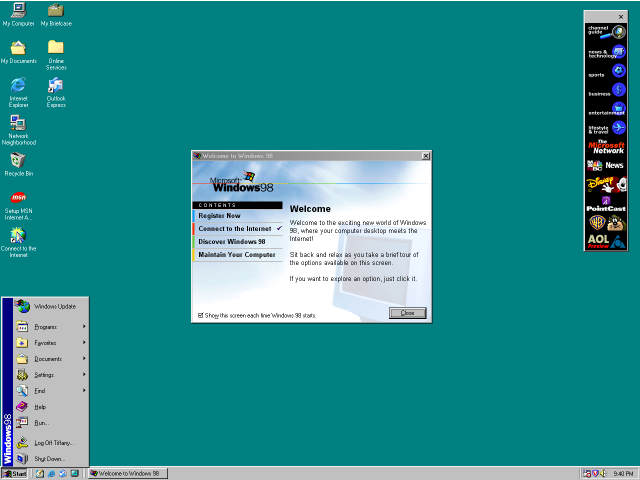
... and so could be considered a fashion. However, this is with good reason as any users that would be using the interface would feel pleased and able just by looking at the aesthetics. Things were very different 10 years ago...


Image of Microsoft Windows 98 from: wikimedia.org

... as hardware was not powerful enough to efficiently show colour/effect rich graphics on even the most advanced home computers. It is visible in the screenshot immediately above that the GUI was not feature or effect rich compared to today's standards, but it is clearly visible how today's fashions have evolved from the GUIs of past years (there is evidence of the introduction of bevelling and gradients on some buttons and backgrounds).

The evolution of the GUI is now not drastically held back by hardware, and so can push in many directions. www.computerhovel.com has an illustrated time-line of the evolution of Microsoft's Windows Operating System, and is a good source to use to see how graphics were held back by the now dated hardware.
In the context of LANT, the program will not attempt to break any graphical boundaries, but instead try to integrate seamlessly into the Windows interface, using any system skin or theme the user has applied to Windows. However, because LANT is pushing for customisability, the users of LANT should have the option to change the program's appearance and presence in their system.

Monday, 17 November 2008

Interface Design

In order to produce the best possible artefact, it is important to view official sources that detail methods and techniques in interface design.

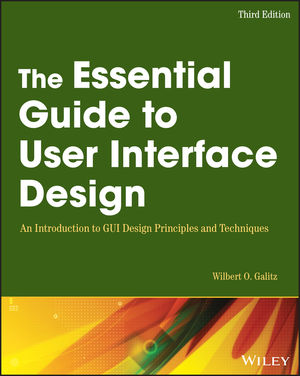
I chose to look at a relatively modern and text-rich book on interface design...

The Essential Guide to User Interface Design: An Introduction to GUI Design Principles and Techniques, 3rd Edition
Wilbert O. Galitz
Wiley
ISBN: 978-0-470-05342-3
April 2007


Image of front cover from: eu.wiley.com

The book specifically looks at computer and 'virtual' interfaces and their design. The book begins with exactly what I was looking for to reassure the fact why LANT is being designed...

"The user interface is the most important part of any computer system. Why? It is the system to most users. It can be seen, it can be heard, and it can be touched. The piles of software code are invisible, hidden behind screens, keyboards, and the mouse. The goals of interface design are simple: to make working with a computer easy, productive, and enjoyable." - Part 1, The Essential Guide to User Interface Design

... this paragraph relates heavily to the main reason why LANT is being thought up; to make life easier. The scenario LANT is meant for would become easier to handle and control, and also be easier to handle the 'unhandlable' situations.

In the context meant for LANT, the task of switching between states will be the focus of ease, where the method to switch should be as apparent and customisable as possible. The unhandlable situations relate to the unpredicatble and uncontrollable options the user would face in using the computer, such as havin gto change IP options, pinging different IP addresses, etc. These options would have to be avaliable to the user, but are only editable by the user, and so can only be made to get accessed quicker by shortcutting or hotkeying etc.

This book will be a good referance to use should any problems occur during the design of LANT, as every aspect and issue of computer interface design is covered. However, this book tends to stick to a 'standard' of interface design, and does not try to advance interfaces much. I will have to use my own creativity when it comes to thinking up or developing unusual ideas for LANT.

Thursday, 13 November 2008

Virtual Desktops

LANT will be a focused version of Virtual desktop software. This kind of software is not new, but is only designed for a rather generalised audience. Many modern operating systems come with virtual desktop capabilities (many Linux distributions and OSX come with it as standard).
One of the applications that bring desktop virtualisation to Windows is called "Yet anOther Desktop Manager 3D" or Yodm3D.


Image of Yodm3d 1.4 from: www.klitetools.com

Yodm3D deals with four separate desktops at one time and the user can switch between them using a 3D accelerated cube effect at any time. It would be possible with LANT to include aesthetic changes between "states" or desktops like this, however it would not be a priority in the design, as the main focus would be what goes on in each state.

Wednesday, 5 November 2008

Touch Screen and "Interface Reduction"

Touch screen technology is not a new technology, but it has now been perfected and has reduced in costs enough to be included in many products. One of the new technologies that is building on touch screen is multi-touch technology. Here is one of the most intuitive multi-touch screens getting premiered by Adobe...


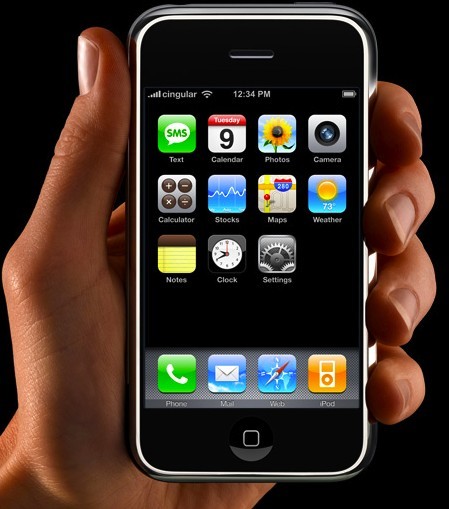
Popular products that include this technology now include the famous Apple iPhone...

Image from: www.techdigest.tv

... and for the future, every day desktop OSs are being designed for touch screen technology, like Microsoft's Windows 7...


Image from: wikipedia

Tuesday, 21 October 2008

Proposal 3 - "Torn City Mobile" (TCMob)

Overview
To follow up on the idea suggested in Proposal 2, I propose to create a Java application for mobile phones that will give players of "Torn City" (TC) the ability to play the game from their mobile phones without having to worry about any mobile phone browser incompatibilities. Users would be able to do everything they usually do on their TC account, but as with Proposal 2, the middleman of the browser would be removed.


Reasoning
TCMob would be a highly popular application that any player of TC (that has a Java and Internet enabled phone) would want to have.

Players of TC cannot always get access to a computer to spend the certain points that they get throughout the day in-game, and so would welcome a way to be able to play the game without their computer. The players would also be far more encouraged to use a dedicated TC application, that is specifically designed for just TC, than experimenting with different mobile browsers that are well-known by TC's players to have issues with TC's cookie and session system.

TCMob would also readjust the elements of TC to fit appropriately on the reduced screen size of the mobile phone.

TCMob would be a separate Java application instead of just a mobile version of the TC website because it would be easier for users to obtain and use. It would also, as already mentioned, remove problems of incompatibility between mobile phone browsers.


Target Audience and Implementation
As with Proposal 2, this program would be targeted at the players of TC. The players of TC would also have to have knowledge of how to install Java applications on their mobile phones.

TCMob would be made to the standard required of Java enabled mobile phones. TCMob could also be developed for mobile phones that charge for their applications, such as the Apple iPhone.


Technical Details

TCMob would require mobile phones that can run .jar (Java) files. It would also require that the phone has internet access, and that the phone user gives the application permission to access the internet. The application would not have to access any of the phone's contacts or 'local' functions.

The application would be able to also cut out some middle ground on some features of TC, such as the 'bot' blocker security feature...


Torn City's 'bot' blocker feature, to stop automated programs performing some functions.

... instead of users having to scroll and click on the numbers, the user using TCMob would be able to just press the relevant number on their phone's keypad.

The software would also offer the option to remember login details (again, as mentioned in Proposal 2, would only be able to remember one set of login details to block multi-account usage).

Proposal 2 - "Torn City Manager" (TCM)

Overview
I propose to create a 'software extension' to a popular online browser-based game called "Torn City" (TC). The application would connect to the regular TC servers and use exactly the same data as is displayed in a browser. The application would use the regular code sent from the servers as a sort of 'feed' rather than a normal compiled page. The key focus of TCM would be customisation in the form of panels and styles, and the removal of the 'middleman' of a browser.


Current TC login page.


Reasoning
I think that TCM would be a popular application for the players of TC. The players currently have to go through somewhat of an effort to login and navigate the basic layout of TC, by having to go through launching their browser, navigating to the TC website, entering their login details and using a non-customisable layout.

TCM would offer the quickest and easiest way for players to login and play TC. It would also offer the customisability that the current TC does not. Players would enjoy the game more if they could choose what to display and how to display it, so as to cut out the features they don't use or find get in the way.

Customisable panels would be a great tool in TCM as it would let players arrange their layout how they want it, and where they want it, much like users can arrange their panels of tools in Adobe Photoshop. Styles would also be an improvement on the current TC system as users would be able to configure what colours or pictures they want for different functions. This could also be expanded to allow for entire themes, which could spark off a new community of theme developers for the game.


Target Audience and Implementation
This program would only be targeted at players of TC. However, it is also possible that the addition of an actual application would encourage non-players to play the game. The players would not have to be too computer literate to run TCM, but would have to be able to install or mount the application depending on what Operating System (OS) they are running.

TCM would have to be implemented on any OS for any spec. computer. As there would be players using all kinds of OSs, TCM would have to be implemented for as many OSs as possible.

If someone is playing TC then they would have to have a computer good enough to run a browser, which would show that their system specs. would be more then sufficient to run a program like TCM.


Technical Details

As mentioned above TCM would need to be able to be implemented on as many OSs as possible.

TCM would require internet access in order to run, as the program will need to connect to TC.

TCM would be able to have its panels detatched from the main window so that when the main window is minimised the panel still shows. (A good example of implementation would be if a player was bidding at an auction in-game, or wanted live updates of the TC stock market)

The software would be able to remember login details if wanted to, and would only allow the remembering of one account login, as multiple accounts are against the usage agreement of TC. (the program may even cut down the numbers of multi-account players)

Proposal 1 - "LANner's Toolkit" (LANT)

Overview
I propose to create an application interface that would enable users to easily switch between their regular computer operation and LAN party operation seamlessly and easily. The interface would completely separate the two 'modes' so neither one could affect each other. The program would also offer the same expandability and customisation of the regular operating system.


Original sketch of the basic interface.


Example of the possible interface showing the procedure to use LANT's main feature in the context of Windows XP.


Reasoning
I think the "LANner's Toolkit" would be a successful and popular application in the ever-growing LAN 'community'. As a 'LANner' myself, and having asked my 'LANning friends' it seems there is a demand for an application like this to be made.

Because LAN parties are so different to regular computer operation, a 'LANner' often has to change settings for their display, network, etc. and it would make life easier if these settings were available at 'less clicks away' than usual. The LANner's Toolkit would also make available 'handy' programs that LANners commonly use, but usually have to search or look for, such as pinging or ip configuration programs.

I believe that Regular and LAN mode should be as separate as possible because of how many changes a computer often has to go through at a LAN. Changes made at a LAN often create a huge difference between LAN and regular operation, and it can sometimes be quite 'lengthy' to put those settings into play at the beginning of a LAN and reset them after the LAN has ended.

Although there are many programs similar to this (VirtuaWin, YODm3D), none of them successfully separate the desktops enough, or, of course, provide relevant 'tools' for LAN parties.


Target Audience and Implementation
This program would be primarily aimed at 'hardcore' LANners or just regular people attending LAN parties, even for the first time. However, it could also possibly be used by network administrators of large networks. These audiences suggest that LANT's users would only have be computer literate enough to install LANT, and that the options provided by default would be available to them easily, but aren't actually a part of LANT, and are certainly not required, instead, as already hinted at, they are recommended.

LANT would be made for the modern Windows PC (XP and above). It would feature the programs and options which are relevant to LANs and which are already included in Windows. LANT would be Windows only, as computer games all primarily run on Windows, and so people attending a LAN are likely to be running it. Other operating systems such as Linux or OSX aren't at all popular for gaming or LAN parties, and so are not worth implementing on or designing for.


Technical Details

LANT would be an 'extended' version of virtual desktop software. It would save settings of regular operation to its own files when LAN mode is enabled, so that when LAN mode is disabled, regular operation can continue immediately exactly as it was before, and visa-versa.

The software would give the option to be able to run on startup, and would include an icon in the system tray of Windows.

LANT would also display technical details on an overlay (configurable) on the desktop. These details could include system uptime, memory/network and CPU usage, computer's workgroup/name/IP address etc.

LANT could also include configurable hotkey shortcuts and combinations to perform actions or launch programs.

Tuesday, 14 October 2008

Brainstorming: Computer Games


After brainstorming is it clear there is no "ultimate" video game experience, and the idea of total immersion video gaming seems to be the only possible way to get "into" the game. Total immersion video games would:

- Tap into senses, respond accordingly
- Have a sedation effect to disable actual actions, use the subconscious to trigger "dream scenarios"

The idea of total immersion video gaming or simulation is a popular idea in Science Fiction, with certain possibilities for the technology playing a prominent role in the stories of shows such as Red Dwarf and Star Trek.

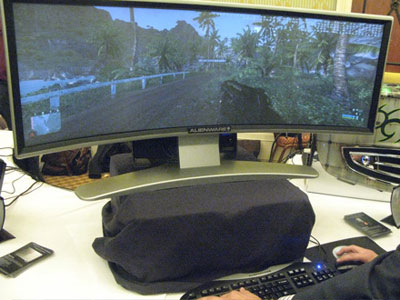
The visual outputs sketched in the brainstorm above are actually all currently implemented (albeit very expensive and not widely used). Here is the only example of the curved display...


www.hexus.net
Alienware's Prototype Curved Display


More information and media on this prototype can be found here.

Interface Future and Influences

Video and Computer games are a huge success, and evolve at the same rate that technology does. Video games gave their players a way of interacting with their entertainment like no other interface or film could, and so games have picked up a huge following, as detailed in the video below...


This video shows how video games are played by millions of people around the world, regardless of colour or gender. The video also details how people get attached to the video game, become emotionally involved with an interface. I think this is where every electronic interface will lead to, and everyone will be able to control their appliances or games just by thought.


www.cyberpunkreview.com
Humans plugged into the Matrix in The Matrix


The Sci-Fi ideas expressed in the Matrix aren't so much of a fantasy, it is not a question of "if we could get plugged into software", but "when we get plugged into software".

Thursday, 9 October 2008

Graphics in Interfaces

Interfaces have come a long way in both how they input and output. The last relevant topic to cover is Graphics.

The graphics used in interfaces keep evolving as technology becomes better and more efficient at showing colours and pixels. This of course means that interfaces never used to include graphics or symbols. With the introduction of screens in electronics, interfaces were basic and hardware was only just powerful enough to output 2-colour text...


Screen shot of the DOS Terminal in Windows XP

The Command-Line Interface (CLI) was a basic way of showing what you input to a computer and what the computer is doing. It was when computers got powerful enough to display graphics and colours where the interface of a computer really attributed to the PC 'boom' in the 1990s...


A modern colour-rich, high resolution theme in Windows XP

The Graphical User Interface (GUI) really took off on every electronic screen interface when it was introduced to the PC. The GUI made previously difficult interfaces simple to use for the user, and so more and more people considered using products that featured them.

GUIs are also continuing to evolve, now often featuring animation and 3D, as backgrounds or even as just the icons. GUIs will continue to evolve at the pace that hardware evolves, so that as components get more powerful, users will not have to sacrifice speed in order to get a graphically-rich interface.

Wednesday, 8 October 2008

Interface Simplification and Modularisation

As technology evolves, and more and more features are implemented, interfaces must adapt to the user's needs. This takes the form of simplification and modularisation.

Simplification
This reduction of options doesn't always mean a reduction of uses or features. It could mean the combining of functions or the reduction of steps to perform a function.

However, there is also reduction examples such as...


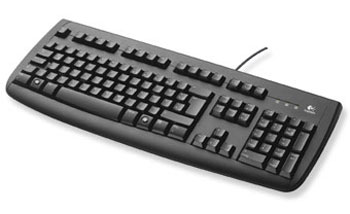
www.scan.co.uk
Logitech Deluxe 250 Wired Keyboard


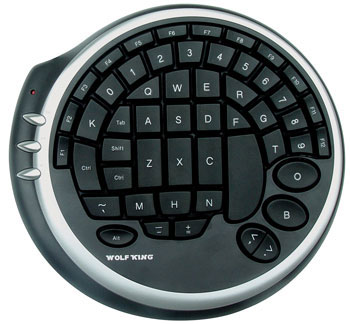
Being reduced to this...


www.scan.co.uk
Wolf King DK-2388U, Warrior Black Circular Gaming Keyboard


Above we see a reduction of features of a regular qwerty keyboard, to make an entirely new interface that is simpler to use for a specific task. In this case it is PC Gaming. PC gamers don't very often need every key on a full keyboard, and so developers produced an interface that is ONLY suited to gaming (or any "avatar" control), and that only provides the essential keys needed.


Modularisation
The modularisation of an interface happens when there are many features available and options within the interface need to be broken up into groups or objects.


Image of the above qwerty keyboard edited to show modularisation.

A well implemented example is used in most regular qwerty keyboards. As highlighted in the picture above, the different groups of keyboard keys are grouped according to their collective function (typing keys, navigation keys, number pad, etc.). This is a simple example, but one that could improve a new user's understanding of they keyboard quicker than if it was not implemented. It should also be noted there is further modularisation within some groups, such as the top function keys, where rather than having all 12 grouped together, they are divided into groups of four.

Modularisation and simplification will continue to be implemented, but it is up to the interface designer when and where to implement them, as not every interface requires action.

Monday, 6 October 2008

The Scaling of Interfaces

In the past few years mobile phones have become an alternative for almost every electronic communication and entertainment device, with modern models incorporating everything from e-mail to video, and music playback. It is an area that is most notable for including more and more features and technology, while at the same time getting smaller and smaller.


www.celtnet.org.uk
Mobile Evolution


Of course, it is most notable that the 'hot' markets for interactive devices getting smaller are the ones for mobile technology. This is everything from mobile phones to laptops, etc. However, there is also somewhat of a 'demand' for regular appliances to get smaller, even for just aesthetic reasons.

But there is also a flip side to this. While the mobile market is getting smaller, the 'immobile' market is getting bigger and bigger.


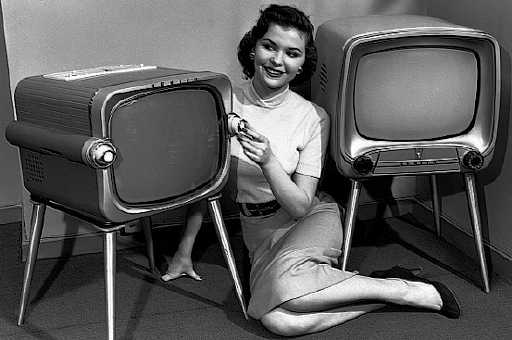
http://randt.files.wordpress.com/2008/05/old_tv.jpg
Old TVs


www.sfgate.com
"World's Largest TV" at CES 2007


TVs are getting bigger and bigger, including more colours, and more and more pixels. The demand for higher resolution and bigger displays has been around since the beginning of TV's 'legacy', and is not going away any time soon. Big TVs are now affordable enough to be in any living room, and are not just used as TVs any more... PCs and other electronics are often able to output to TVs, and so render large TVs as a sort of entertainment hub.

It has been widely reported that the laptop market is overtaking the desktop market at growth (source). So the future, it seems, will see the two ends of the scale form together, bringing the expandability and assets of large devices to a small and portable mobile device.

Friday, 3 October 2008

Initial Research

For the beginning of this research, it would be appropriate to concentrate on theories and 'movements' of interfaces, rather than actual implementations.

Areas discussed include:
  • Scale (how physical interfaces are reducing in size)
  • Simplification (how interfaces are having to be simplified to become more streamlined)
  • Modularity (how interfaces are becoming sectioned and categorised within themselves)
  • Graphics (how interfaces, and particularly virtual or screen interfaces, are including more and more graphics and icons/symbols)
It would be a good start to see how these areas are being implemented in today's interfaces, and look at what they evolved from. I will also only focus on the interfaces of electronics, the area that I am interested in.