Friday, 28 November 2008

LANT Logo Design

The LANT project needs to be branded, and so a logo, theme and colour scheme needs to be created.

To start the branding process off, I deconstructed the name: "LANner's Toolkit". I found that the word "LANner's" could be considered to 'limit' the potential audience for LANT, as it is a tergeted and exclusive name. A more appropriate name would be LAN Toolkit, as it is descriptive of what the program does and not who it is for.

To aid in the deconstruction of the name, I brainstormed what the words that make up the the name mean...


... based from this deconstruction, I could then put together the elements and make good use of them to make a decent visual metaphor, which has been proven to be a very successful design method, and would be highly appropriate in LANT's design.

Here is the logo that was created...


... as is described in the annotations, the text in the logo relates heavily to computer associated elements, in particular, the word "LAN" in the logo symbolising a diagram or representation of a LAN. This logo sets the standard needed for the branding, and so the colours and shapes can be continued over into the program itself, and the supporting media (websites, etc.).

Wednesday, 19 November 2008

Design 'Fashions'

Fashion does not always stay in the range of clothes or products, it is sometimes the interface or the design of an interface that is influenced by a fashion.


Image of Apple OSX Tiger from: imageshack.us


The above screenshot shows one of the more popular fashions amongst electronic screen-based interfaces. The fashion to put gradients on backgrounds and titles, 'gloss' and drop shadows on icons and buttons etc. , and anti-aliasing on edges and text is noticeable on many of today's OSs...


Image of Microsoft Windows Vista from: www.softwareinreview.com


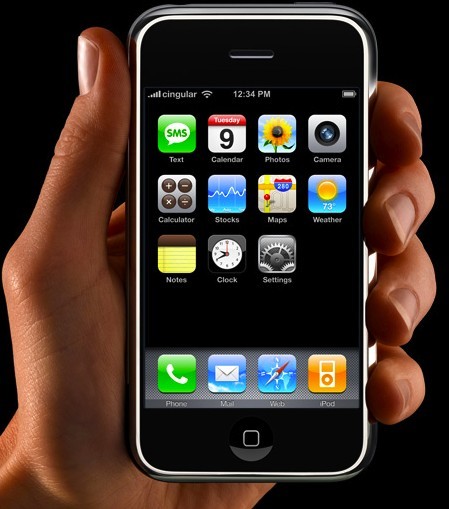
Image of Apple's iPhone OS from: technabob.com

... and so could be considered a fashion. However, this is with good reason as any users that would be using the interface would feel pleased and able just by looking at the aesthetics. Things were very different 10 years ago...


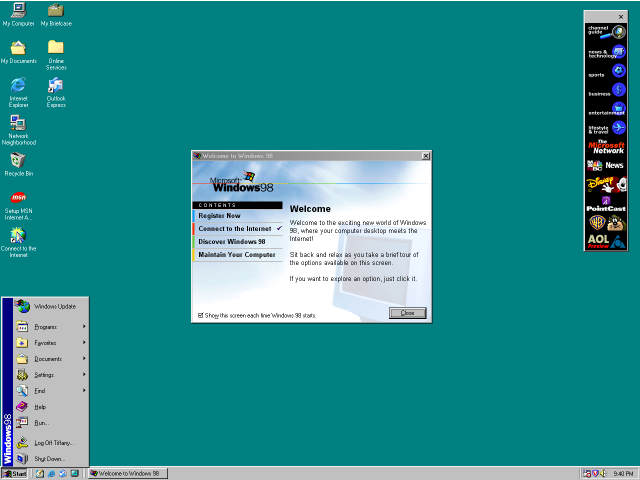
Image of Microsoft Windows 98 from: wikimedia.org

... as hardware was not powerful enough to efficiently show colour/effect rich graphics on even the most advanced home computers. It is visible in the screenshot immediately above that the GUI was not feature or effect rich compared to today's standards, but it is clearly visible how today's fashions have evolved from the GUIs of past years (there is evidence of the introduction of bevelling and gradients on some buttons and backgrounds).

The evolution of the GUI is now not drastically held back by hardware, and so can push in many directions. www.computerhovel.com has an illustrated time-line of the evolution of Microsoft's Windows Operating System, and is a good source to use to see how graphics were held back by the now dated hardware.

In the context of LANT, the program will not attempt to break any graphical boundaries, but instead try to integrate seamlessly into the Windows interface, using any system skin or theme the user has applied to Windows. However, because LANT is pushing for customisability, the users of LANT should have the option to change the program's appearance and presence in their system.

Monday, 17 November 2008

Interface Design

In order to produce the best possible artefact, it is important to view official sources that detail methods and techniques in interface design.

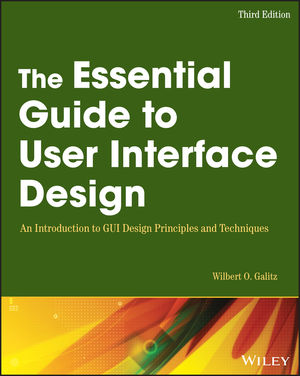
I chose to look at a relatively modern and text-rich book on interface design...

The Essential Guide to User Interface Design: An Introduction to GUI Design Principles and Techniques, 3rd Edition
Wilbert O. Galitz
Wiley
ISBN: 978-0-470-05342-3
April 2007


Image of front cover from: eu.wiley.com

The book specifically looks at computer and 'virtual' interfaces and their design. The book begins with exactly what I was looking for to reassure the fact why LANT is being designed...

"The user interface is the most important part of any computer system. Why? It is the system to most users. It can be seen, it can be heard, and it can be touched. The piles of software code are invisible, hidden behind screens, keyboards, and the mouse. The goals of interface design are simple: to make working with a computer easy, productive, and enjoyable." - Part 1, The Essential Guide to User Interface Design

... this paragraph relates heavily to the main reason why LANT is being thought up; to make life easier. The scenario LANT is meant for would become easier to handle and control, and also be easier to handle the 'unhandlable' situations.

In the context meant for LANT, the task of switching between states will be the focus of ease, where the method to switch should be as apparent and customisable as possible. The unhandlable situations relate to the unpredicatble and uncontrollable options the user would face in using the computer, such as havin gto change IP options, pinging different IP addresses, etc. These options would have to be avaliable to the user, but are only editable by the user, and so can only be made to get accessed quicker by shortcutting or hotkeying etc.

This book will be a good referance to use should any problems occur during the design of LANT, as every aspect and issue of computer interface design is covered. However, this book tends to stick to a 'standard' of interface design, and does not try to advance interfaces much. I will have to use my own creativity when it comes to thinking up or developing unusual ideas for LANT.

Thursday, 13 November 2008

Virtual Desktops

LANT will be a focused version of Virtual desktop software. This kind of software is not new, but is only designed for a rather generalised audience. Many modern operating systems come with virtual desktop capabilities (many Linux distributions and OSX come with it as standard).

One of the applications that bring desktop virtualisation to Windows is called "Yet anOther Desktop Manager 3D" or Yodm3D.


Image of Yodm3d 1.4 from: www.klitetools.com

Yodm3D deals with four separate desktops at one time and the user can switch between them using a 3D accelerated cube effect at any time. It would be possible with LANT to include aesthetic changes between "states" or desktops like this, however it would not be a priority in the design, as the main focus would be what goes on in each state.

Wednesday, 5 November 2008

Touch Screen and "Interface Reduction"

Touch screen technology is not a new technology, but it has now been perfected and has reduced in costs enough to be included in many products. One of the new technologies that is building on touch screen is multi-touch technology. Here is one of the most intuitive multi-touch screens getting premiered by Adobe...


Popular products that include this technology now include the famous Apple iPhone...

Image from: www.techdigest.tv

... and for the future, every day desktop OSs are being designed for touch screen technology, like Microsoft's Windows 7...


Image from: wikipedia