

www.celtnet.org.uk
Mobile Evolution
Of course, it is most notable that the 'hot' markets for interactive devices getting smaller are the ones for mobile technology. This is everything from mobile phones to laptops, etc. However, there is also somewhat of a 'demand' for regular appliances to get smaller, even for just aesthetic reasons.
But there is also a flip side to this. While the mobile market is getting smaller, the 'immobile' market is getting bigger and bigger.
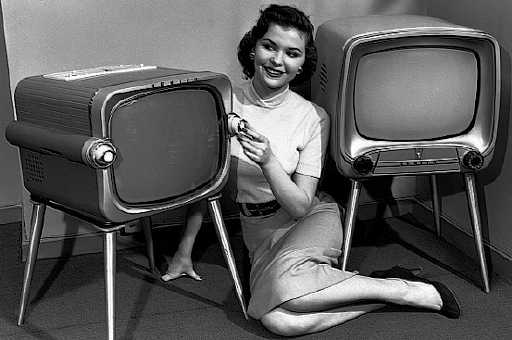
http://randt.files.wordpress.com/2008/05/old_tv.jpg
Old TVs

www.sfgate.com
"World's Largest TV" at CES 2007
TVs are getting bigger and bigger, including more colours, and more and more pixels. The demand for higher resolution and bigger displays has been around since the beginning of TV's 'legacy', and is not going away any time soon. Big TVs are now affordable enough to be in any living room, and are not just used as TVs any more... PCs and other electronics are often able to output to TVs, and so render large TVs as a sort of entertainment hub.
It has been widely reported that the laptop market is overtaking the desktop market at growth (source). So the future, it seems, will see the two ends of the scale form together, bringing the expandability and assets of large devices to a small and portable mobile device.

No comments:
Post a Comment